Choosing the right dumpster size is one of the most important decisions when planning a cleanup, renovation, demolition, or construction project. While larger bins may appear more convenient, a 10-yard dumpster is often the most practical option for projects involving heavy materials, limited space, or smaller debris volumes.
Because heavy materials reach transportation weight limits quickly, many contractors and homeowners find that a 10-yard dumpster provides a safer and more efficient solution than larger containers. Understanding the dimensions, capacity, and typical uses of a 10-yard dumpster can help prevent overloading, reduce hauling complications, and improve overall project efficiency.
Here is the Quick Answer:
A 10-yard dumpster typically measures approximately 16 feet long, 8 feet wide, and 2.5 feet high. It is commonly used for concrete, soil, brick, asphalt, tile, and other dense materials that become extremely heavy before occupying much space. It is also a practical option for small renovations, garage cleanouts, and demolition projects where site space is limited.
What are the dimensions of a 10-yard dumpster?

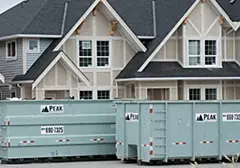
While exact dimensions can vary between providers, Peak Disposal’s 10-yard concrete bin measures approximately:
- Length: 16 feet
- Width: 8 feet
- Height: 2.5 feet
Its lower profile makes loading easier than many larger containers, particularly when handling dense materials such as concrete, brick, stone, tile, or excavation debris.
Because the container is relatively compact, it can often fit comfortably on residential driveways, smaller job sites, and properties where available space is limited.

How does a 10-yard dumpster compare to pickup-truck loads?
Many people find it easier to visualize pickup-truck loads than cubic yards.
A 10-yard dumpster can often hold the equivalent of several pickup-truck loads of debris, depending on the type of material being removed and how it is loaded. For projects involving concrete, soil, brick, tile, or demolition debris, a single dumpster can eliminate the need for multiple disposal trips and simplify waste handling on site.
Because material density varies significantly, the exact number of pickup-truck loads will differ from one project to another. However, a 10-yard dumpster generally provides substantially more disposal capacity than a single truckload while allowing debris to remain contained throughout the project.
How much can a 10-yard dumpster hold?
The term “10-yard” refers to the dumpster’s internal volume, which is approximately 10 cubic yards.
For many homeowners, visualizing cubic yards can be difficult. A more practical way to think about capacity is to consider the types of projects the container is designed to support.
Although a 10-yard dumpster is one of the smaller container sizes available, it is often selected for projects involving dense materials that become heavy quickly.
A 10-yard dumpster can often accommodate:
- small demolition projects
- concrete removal
- tile removal
- brick disposal
- asphalt disposal
- excavation debris
- garage cleanouts
- basement cleanups
- small renovation projects
However, capacity is often limited by weight before volume becomes a concern.
This is particularly true for heavy materials that quickly reach safe hauling limits even when the container appears only partially full.
Why Heavy Materials Often Require a 10-Yard Dumpster
Many people assume larger dumpsters are automatically better because they hold more debris. With heavy materials, however, hauling weight often becomes the limiting factor long before volume does.
Concrete, soil, brick, tile, asphalt, stone, and excavation debris can generate substantial weight in a relatively small amount of space. A larger dumpster filled with these materials may approach transportation limits quickly, even when the container is not visually full.
This is one reason contractors frequently choose 10-yard dumpsters for concrete removal, excavation projects, driveway demolition, retaining-wall removal, masonry disposal, and hardscape demolition. The smaller container helps control hauling weight while still providing sufficient capacity for dense materials.
In many situations, the question is not how much space the material occupies but how much it weighs once loaded.
Is a 10-yard dumpster big enough?
One of the most common concerns is whether a 10-yard dumpster will provide enough capacity for a specific project. While every project generates waste differently, the examples below offer a general guide.
| Project Type | Usually Suitable for a 10-Yard Dumpster? |
| Small Bathroom Renovation | Yes |
| Garage Cleanout | Yes |
| Basement Cleanup | Yes |
| Flooring Removal From Several Rooms | Often |
| Small Deck Removal | Often |
| Concrete Patio or Walkway Removal | Often |
| Kitchen Renovation | Sometimes |
| Full-Home Cleanout | Often Too Small |
| Full-Home Renovation | Usually Too Small |
| Large Construction Project | Usually Too Small |
Actual capacity depends on both volume and material weight. Heavy materials such as concrete, soil, brick, and tile may reach hauling limits much faster than lighter household debris, even when the container is not visually full.

When is a 10-yard dumpster usually the right choice?
A 10-yard dumpster is often a practical choice when the project involves dense materials, limited site space, or relatively modest debris volumes.
It is commonly selected when:
- concrete, brick, tile, or soil are being removed
- driveway space is limited
- debris is concentrated in a single area
- a larger container would be unnecessary
- hauling weight is a greater concern than debris volume
For many projects, choosing a smaller dumpster helps improve loading efficiency while reducing the risk of overweight loads.
Will a 10-yard dumpster fit on a driveway?
In many cases, yes.
Because Peak Disposal’s 10-yard bin is approximately 16 feet long and 8 feet wide, it is often compatible with standard residential driveways. The relatively low height can also make loading easier throughout the project.
However, placement depends on site-specific factors such as:
- driveway dimensions
- slope conditions
- overhead obstructions
- vehicle access
- local placement requirements
Reviewing access conditions before delivery helps avoid unnecessary complications.
Weight matters more than volume
One of the most common mistakes people make when renting dumpsters is focusing entirely on volume.
With a 10-yard dumpster, weight often becomes the more important consideration.
For example, a container filled with broken concrete may reach hauling limits while still appearing only partially full. By contrast, lighter materials such as wood, packaging, or household junk may occupy the full volume without creating similar weight concerns.
Understanding the difference helps improve planning and supports safer hauling operations.

10-Yard Dumpster vs. Larger Dumpster Sizes
A 10-yard dumpster is not necessarily the best choice for every project.
Larger cleanouts, major renovations, roofing projects, and commercial work may generate significantly more debris volume than a 10-yard container can accommodate efficiently.
However, when heavy materials are involved, smaller containers often outperform larger ones because they help control transportation weight and improve loading safety.
Choosing the correct size depends on both the type of material and the amount being removed.
When You May Need a Larger Dumpster Instead
While a 10-yard dumpster works well for many projects, some situations may justify a larger container.
You may benefit from a 20-yard or 30-yard dumpster if:
- multiple rooms are being renovated simultaneously
- a full-home cleanout is planned
- large amounts of bulky household debris are being removed
- roofing materials are being removed from a larger structure
- demolition debris will continue accumulating over several weeks
Projects generating high debris volume often benefit more from additional capacity than from a smaller footprint.
How to Determine Whether a 10-Yard Dumpster Is Right for Your Project
A 10-yard dumpster is often a strong fit when:
- heavy materials are being removed
- project space is limited
- driveway placement is preferred
- debris volumes are relatively modest
- loading accessibility is important
Projects generating large quantities of lighter debris may benefit from larger container sizes instead.

How Peak Disposal Helps Match the Right Bin to the Project
Selecting the correct dumpster size involves more than estimating debris volume.
Peak Disposal helps homeowners, contractors, landscapers, and project managers evaluate material type, site conditions, loading requirements, and hauling considerations before delivery.
This helps reduce the risk of ordering a container that is too large, too small, or poorly suited to the type of waste being generated.
Is a 10-yard dumpster right for your project?
For projects involving concrete, soil, tile, brick, asphalt, or other dense materials, a 10-yard dumpster is often the preferred choice because it balances hauling efficiency, loading accessibility, and transportation weight management.
If you are unsure which dumpster size best matches your project requirements, Peak Disposal can help identify the most appropriate solution based on material type, project scope, and site conditions.