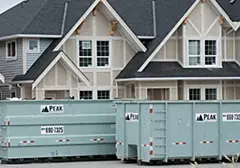
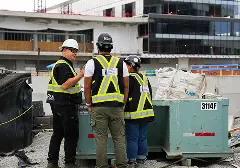
Choosing the right dumpster size is especially important when your project involves concrete, soil, rock, asphalt, brick, or other dense materials. These materials can reach safe transportation weight limits quickly, even when they occupy relatively little space inside the bin.
Peak Disposal’s 8-yard concrete bin is designed for compact, heavy-material disposal where weight control matters more than overall volume. It is commonly used for small concrete removals, excavation debris, masonry disposal, hardscape demolition, and other projects where a larger bin may create unnecessary hauling-weight concerns.
Understanding the dimensions, capacity, and typical uses of an 8-yard dumpster can help reduce overloading risks, improve loading efficiency, and keep heavy debris removal more manageable.
Here is the Quick Answer:
Peak Disposal’s 8-yard concrete bin measures approximately 15 feet long, 8 feet wide, and 2 feet high. It is commonly used for concrete, soil, rock, brick, asphalt, masonry, and other dense materials that become extremely heavy before occupying much space. Because it is one of Peak Disposal’s smallest bin options, it is often preferred when hauling weight is the primary concern.
What are the dimensions of an 8-yard dumpster?

While exact dimensions can vary between providers, Peak Disposal’s 8-yard dumpster measures approximately:
- Length: 15 feet
- Width: 8 feet
- Height: 2 feet
Its low-profile design makes loading heavy materials easier than taller containers, particularly when disposing of concrete, brick, rock, asphalt, soil, or excavation debris.
Because of its compact footprint, an 8-yard dumpster can often fit on residential driveways, smaller construction sites, and properties where available space is limited.
How does an 8-yard dumpster compare to pickup-truck loads?
Many people find pickup-truck loads easier to visualize than cubic yards.
An 8-yard Bin can often hold the equivalent of four pickup-truck loads of heavy material, depending on the type of debris and how it is loaded. For projects involving concrete removal, retaining-wall demolition, hardscape removal, or excavation work, using a single dumpster can eliminate multiple disposal trips while helping keep the work area organized.
The exact number of pickup loads varies based on material density, but an 8-yard dumpster generally provides substantially more disposal capacity than a single pickup truck while allowing debris to remain safely contained throughout the project.
How much can an 8-yard dumpster hold?
The term “8-yard” refers to the dumpster’s internal volume, which is approximately 8 cubic yards.
Although the container is smaller than many other dumpster sizes, it is specifically intended for projects involving dense materials rather than large volumes of lightweight debris.
An 8-yard dumpster can often accommodate:
- concrete removal
- brick disposal
- rock and stone removal
- asphalt disposal
- excavation spoil
- soil removal
- retaining-wall demolition
- small masonry projects
- hardscape removal
However, capacity is frequently limited by weight before the dumpster reaches its full volume.
Dense materials can quickly approach safe hauling limits even when the dumpster appears only partially full.
Learn More: How to Dispose of Concrete, Dirt & Asphalt in BC

Why Heavy Materials Often Require an 8-Yard Dumpster
Many people assume that a larger dumpster is automatically a better choice. With heavy materials, however, transportation weight often becomes the limiting factor long before available space is used.
Concrete, brick, stone, asphalt, soil, and excavation debris generate substantial weight in a relatively small volume. Filling a larger dumpster with these materials can quickly create an overweight load, even when the container is far from full.
For this reason, contractors commonly choose 8-yard dumpsters for:
- concrete removal
- excavation work
- retaining-wall demolition
- masonry disposal
- hardscape removal
- landscaping projects involving soil or rock
The smaller container helps manage hauling weight while still providing practical capacity for dense materials.
In many situations, the limiting factor is not how much space the debris occupies—but how much it weighs.
Learn More: Dirt and Concrete Bin Rentals: How to Avoid Overweight Fines in BC
Is an 8-yard dumpster big enough?
One of the most common questions is whether an 8-yard dumpster provides enough capacity for a particular project. While every project is different, the examples below offer general guidance.
| Project Type | Usually Suitable for an 8-Yard Dumpster? |
| Concrete Patio or Walkway Removal | Yes |
| Soil or Excavation Projects | Yes |
| Brick or Masonry Removal | Yes |
| Retaining-Wall Demolition | Yes |
| Small Stone or Hardscape Removal | Yes |
| Small Bathroom Renovation | Sometimes |
| Garage Cleanout | Sometimes |
| Basement Cleanup | Sometimes |
| Full Kitchen Renovation | Usually Too Small |
| Whole-Home Cleanout | Usually Too Small |
Actual capacity depends on both debris volume and material weight. Dense materials such as concrete, soil, brick, asphalt, and rock typically reach hauling limits much sooner than lighter household waste.
When is an 8-yard dumpster usually the right choice?
An 8-yard dumpster is often the right choice when the project involves very heavy materials, relatively modest debris volumes, or limited site space.
It is commonly selected when:
- concrete or asphalt is being removed
- soil or excavation spoil requires disposal
- brick or masonry demolition is underway
- retaining walls or landscape features are being removed
- driveway space is limited
- hauling weight is a greater concern than debris volume
For many heavy-material projects, choosing a smaller dumpster helps improve loading efficiency while reducing the likelihood of overweight loads.

Will an 8-yard dumpster fit on a driveway?
In many cases, yes.
Because Peak Disposal’s 8-yard dumpster measures approximately 15 feet long and 8 feet wide, it is often compatible with standard residential driveways. Its lower height can also make loading dense materials easier throughout the project.
However, placement depends on site-specific conditions, including:
- driveway dimensions
- slope conditions
- overhead obstructions
- vehicle access
- local placement requirements
Reviewing access conditions before delivery helps prevent unnecessary complications.
Why Weight Matters More Than Volume
One of the biggest misconceptions about dumpster rentals is assuming that available space is the most important factor.
With an 8-yard dumpster, weight is usually the primary consideration.
For example, a dumpster filled with broken concrete or saturated soil may reach safe hauling limits while still appearing only partially full. By comparison, lighter materials such as wood, packaging, or household debris occupy considerably more space before reaching similar weights.
Understanding this difference helps improve planning and supports safer transportation.
8-Yard Dumpster vs. Larger Dumpster Sizes
An 8-yard dumpster is not intended for every project.
Large cleanouts, major renovations, roofing projects, and construction work involving lighter debris often benefit from larger dumpster sizes that provide greater volume.
However, when dense materials are involved, the 8-yard dumpster is frequently the preferred option because it helps control hauling weight while maintaining easier loading and safer transportation.
Choosing the correct dumpster depends on both the amount of debris and the type of material being removed.
When You May Need a Larger Dumpster Instead
Although an 8-yard dumpster works well for many heavy-material projects, larger containers may be more practical in some situations.
You may benefit from a 20-yard, 30-yard or 40-yard bin if:
- multiple rooms are being renovated
- a whole-home cleanout is planned
- large quantities of household debris are being removed
- roofing materials are being removed from larger structures
- demolition debris will continue accumulating over an extended period
- the project generates primarily lighter materials
Projects producing higher debris volumes often benefit more from additional capacity than from the smaller footprint of an 8-yard container.
How to Determine Whether an 8-Yard Dumpster Is Right for Your Project
An 8-yard Bin is often a good fit when:
- very heavy materials are being removed
- debris volume is relatively modest
- driveway placement is preferred
- loading accessibility is important
- transportation weight is the primary concern
Projects generating larger volumes of lighter debris are often better suited to larger dumpster sizes.

How Peak Disposal Helps Match the Right Bin to the Project
Selecting the correct dumpster size involves more than estimating debris volume.
Peak Disposal helps homeowners, contractors, landscapers, and project managers evaluate material type, site conditions, loading requirements, and hauling considerations before delivery.
This helps reduce the risk of ordering a dumpster that is either too large, too small, or not well suited to the type of waste being generated.
Is an 8-yard dumpster right for your project?
For projects involving concrete, soil, rock, brick, asphalt, masonry, or other exceptionally dense materials, an 8-yard dumpster is often the preferred choice because it helps balance hauling efficiency, loading accessibility, and transportation weight management.
If you are unsure which dumpster size best fits your project, Peak Disposal can help recommend the most appropriate option based on your material type, project scope, and site conditions.