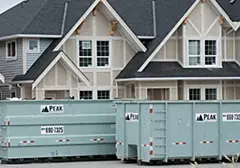
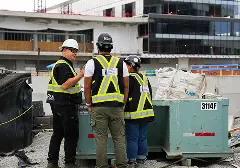
Excavating soil in Coquitlam does not automatically mean laboratory contamination testing is required. What needs to happen before soil leaves a property depends on factors such as the site’s current and historical use, the amount of soil being moved, where the material will go, and whether provincial contaminated-sites and soil-relocation requirements apply.
Coquitlam also has municipal rules for soil movement and grading. These requirements operate separately from British Columbia’s environmental framework, so a City soil-management permit and provincial soil characterization or notification should not be treated as the same thing.
Understanding those distinctions before excavation can help property owners and contractors establish an appropriate receiving pathway and avoid having loads delayed or rejected after they have already been excavated.
Here is the Quick Answer:
- Not every excavation in Coquitlam requires contamination testing. Testing or characterization depends on site history, applicable provincial requirements, receiving-site or facility criteria, and project-specific circumstances.
- The City of Coquitlam currently requires a Soil Management Permit when moving, removing, or depositing more than 50 m³ of soil or changing a property’s grade by more than 1 metre.
- Soil from properties with current or former Schedule 2 specified industrial or commercial uses may be subject to additional provincial characterization and relocation requirements. Schedule 2 is part of BC’s Contaminated Sites Regulation.
- BC currently provides a 30 m³ exemption from the soil-relocation notification requirement for qualifying low-, moderate-, medium-, or intermediate-risk source sites, calculated over the same project within a two-year period. No amount is exempt on that basis for a high-risk site.
- Before arranging dirt hauling, confirm the soil’s status, receiving requirements, and any required professional or regulatory steps. Then provide Peak Disposal with accurate information about the material so the appropriate bin and hauling arrangement can be planned.
Does excavated soil have to be tested in Coquitlam?
No. Soil contamination testing is not automatically required every time soil is excavated in Coquitlam.
Whether testing or broader soil characterization is necessary depends on the circumstances of the site and the proposed relocation or disposal pathway. A residential landscaping project on a property with no identified environmental concerns may raise very different requirements from excavation at a property with a history of industrial or commercial activity.
Factors that can affect the required process include the site’s current and previous uses, known or suspected contamination, the volume of soil being removed, where the soil will be taken, and the acceptance criteria of the intended receiving site or facility.
The important distinction is that Coquitlam’s municipal rules for moving soil do not create a universal laboratory-testing requirement. The City’s Soil Management Permit rules address soil movement and grading, while environmental characterization and off-site soil relocation are also governed by the applicable provincial framework.
If a project’s soil status is uncertain, the appropriate environmental professional should determine what investigation, sampling, laboratory analysis, or other characterization is required before the material is moved.

When does Coquitlam require a soil management permit?
The City of Coquitlam states that a Soil Management Permit is required when moving, removing, or depositing more than 50 cubic metres of soil or when changing the grade of a property by more than 1 metre.
The City’s Soil Management Bylaw regulates the deposition and removal of soil within Coquitlam. The City also states that permit applications must include technical information from appropriate qualified professionals so that the excavation addresses applicable requirements.
This municipal threshold should not be interpreted as a contamination-testing threshold. For example, moving less than 50 m³ does not by itself establish that soil is environmentally suitable for unrestricted relocation. Conversely, exceeding 50 m³ and requiring a City permit does not automatically mean that the same laboratory-testing requirements apply to every project.
Where the scope of an excavation is close to the threshold or the applicability of the bylaw is uncertain, confirm the current requirements with the City of Coquitlam before work begins.

50 m³ vs. 30 m³: Two Different Requirements
The 50 m³ and 30 m³ figures that can arise when planning soil work in Coquitlam belong to different regulatory systems.
Coquitlam’s more-than-50-m³ threshold relates to the City’s Soil Management Permit.
The provincial 30 m³ figure, by contrast, concerns an exemption from a particular soil-relocation notification requirement. Under the current Contaminated Sites Regulation, 30 m³ is prescribed as exempt for qualifying low-, moderate-, medium-, or intermediate-risk source sites, with the amount calculated over the same project during any two-year period. No amount is prescribed under this exemption for high-risk sites.
A project can therefore fall below one threshold while still having obligations under the other regulatory framework. The numbers should never be used interchangeably.

How BC’s Schedule 2 Rules Affect Soil Removal
Schedule 2 of British Columbia’s Contaminated Sites Regulation identifies specified industrial and commercial uses. The current Schedule includes numerous categories of activities with potential relevance to contaminated-site assessment and soil relocation.
These can include certain fuel-related, automotive, manufacturing, chemical, waste-management, wood-treatment, and other specified activities. Whether a property falls within Schedule 2 should be determined from the actual present and historical uses of the site rather than inferred simply because a property is commercially zoned or occupied by a business.
Where soil originates from a property with a current or former Schedule 2 use, provincial requirements may require closer consideration of the soil’s quality before relocation.
That process can involve reviewing site history, characterizing the soil, comparing analytical results with standards applicable to the intended receiving site, involving a Qualified Professional where required, and providing a Soil Relocation Notification when the applicable conditions are met.
This is why statements such as “all commercial soil must be tested” are inaccurate. The regulatory framework is based on the specified use, soil quality, receiving conditions, exemptions, and other applicable requirements—not commercial status alone.
What is a soil relocation notification?
A Soil Relocation Notification is part of British Columbia’s provincial framework governing certain off-site movements of soil.
Under the current Contaminated Sites Regulation, a required notice must be provided to the Province by a Qualified Professional through the designated provincial system. The regulation states that it must generally be provided at least one week and no more than two years before the soil removal covered by the notice.
Where analysis is required, the notification framework incorporates information about the soil’s quality, including the substances analyzed and their concentrations.
A Soil Relocation Notification is therefore not simply a hauling document completed by a bin-rental company. The environmental and regulatory determinations behind it belong with the appropriate Qualified Professional and project parties.
What does the 30 m³ exemption mean?
The current provincial regulation prescribes 30 m³ as exempt from the notification requirement for soil removed from qualifying source sites classified as low, moderate, medium, or intermediate risk. The volume is cumulative for the same project during a two-year period. For a high-risk source site, the regulation prescribes no exempt amount under this provision.
This does not mean that “anything under 30 m³ does not need testing.”
The provision concerns an exemption from a specific notification requirement. Other environmental assessment, characterization, receiving-site, facility, project, or legal requirements can still apply. Soil should therefore not be assumed suitable for unrestricted relocation merely because the project involves less than 30 m³.
Soil Testing vs. Soil Characterization: What’s the Difference?
The terms are sometimes used interchangeably in everyday project discussions, but they do not describe exactly the same thing.
Soil testing generally refers to collecting representative samples and having them analyzed by a laboratory for specified substances.
Soil characterization is broader. It can incorporate the site’s history, the source and depth of the soil, sampling and laboratory results, applicable environmental standards, the proposed receiving site’s use, and professional interpretation of those findings.
In other words, receiving a laboratory report is not necessarily the entire decision-making process. Where provincial requirements call for a Qualified Professional, that professional determines the appropriate assessment approach and interprets the information in the context of the applicable regulatory pathway.
For contractors and property owners, the practical takeaway is straightforward: if environmental characterization may be required, establish that process before the soil is excavated and hauled away, rather than trying to determine its status after it has already been loaded.

Where can excavated soil go?
The appropriate destination for excavated soil depends on more than whether the dirt appears clean.
Factors can include the property’s history, the soil’s analytical quality where characterization is required, whether the soil meets the relevant criteria for its proposed destination, the receiving site’s land use, and the receiving facility’s own acceptance requirements.
This is also where the common term “clean fill” needs care.
“Clean fill” is widely used as an industry term, but it should not be treated as a universal regulatory classification. Whether soil can be accepted for a particular fill, relocation, recycling, or disposal pathway depends on its source, quality, receiving site, and applicable requirements.
Soil from an apparently ordinary residential excavation should not automatically be described as clean simply because there is no visible staining or obvious contamination.
Likewise, soil that cannot follow one relocation pathway is not necessarily destined for the same facility as ordinary excavation material. The appropriate receiving option depends on how the soil has been classified and what the receiving facility is authorized and prepared to accept.
When should excavated soil receive additional review?
Certain circumstances should prompt contractors or property owners to obtain appropriate environmental advice before assuming excavated soil can leave the property as ordinary dirt.
Relevant factors can include a history of specified industrial or commercial activity, known spills, fuel storage, former automotive or repair operations, visible staining, unusual odours, buried waste, imported fill of uncertain origin, or existing environmental reports identifying concerns.
These are warning signs rather than a diagnostic test.
The absence of staining, odours, or other visible indicators does not establish that soil is uncontaminated. Some substances cannot be identified by sight or smell, which is one reason site history and professional characterization can matter.
Before Excavation: Plan the Soil Pathway First
Before digging, establish approximately how much soil the project will generate and whether Coquitlam’s Soil Management Permit requirements may apply. For projects that cross the City’s threshold or involve significant grade changes, the municipal process should be addressed before soil movement begins.
Next, consider the property’s present and historical uses. If Schedule 2 activities or other environmental concerns may be relevant, engage the appropriate Qualified Professional to determine what investigation or characterization is necessary.
The intended receiving destination should also be established early. Soil-quality requirements can depend on where the material is going, so testing without understanding the proposed receiving pathway may not answer every project question.
Once the material status and destination requirements are understood, provide the hauling company with accurate information about the soil source, project, and any characterization that affects acceptance. This allows the correct equipment and loading approach to be planned before the bin arrives.
For a broader look at planning excavation soil removal, see our Excavation Soil Disposal in Metro Vancouver guide.

Choosing a Bin for Excavated Soil
Soil is dense, which makes transportation weight more important than container volume when selecting a bin. A large roll-off bin that provides plenty of physical space for construction debris may become too heavy for safe transportation long before it is filled with soil.
For approved soil-removal projects, Peak Disposal generally uses smaller heavy-material bins and project-specific loading instructions rather than encouraging customers to fill larger construction bins with dense material.
The 8-yard bin measures approximately 15’ × 8’ × 2’, while the 10-yard bin measures approximately 16’ × 8’ × 2.5’. Which size is appropriate depends on the soil, planned quantity, site conditions, hauling requirements, and receiving pathway.
[Compare Peak Disposal Bin Sizes]
[Discuss Your Soil Disposal Project With Peak Disposal]
How Peak Disposal Fits Into the Process
Peak Disposal can help with bin selection, delivery, hauling logistics, and the receiving pathway for approved excavated soil once the relevant material and project requirements are understood.
Peak Disposal does not replace an environmental consultant, laboratory, Qualified Professional, regulator, or municipal authority. Environmental assessment, contamination testing, regulatory determinations, professional certifications, and permit approvals remain the responsibility of the appropriate project parties and authorities.
Providing accurate information about where the soil originated, what the excavation involves, and any environmental characterization already completed helps Peak plan a suitable bin and hauling arrangement. It can also reduce the risk of discovering after loading that the material does not meet the requirements of the planned receiving facility.
If there is uncertainty about contamination or regulatory status, resolve that issue with the appropriate professional before treating the material as ordinary excavation soil.
Planning Excavation or Dirt Disposal in Coquitlam?
Establishing the soil’s regulatory and receiving requirements before hauling can make the removal process much more straightforward. Once you know what material is being excavated and how it can be handled, Peak Disposal can help plan an appropriate heavy-material bin, delivery, and pickup arrangement.
[Discuss Your Soil Disposal Project With Peak Disposal]
Sources: