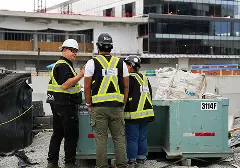
A roll-off bin and the truck delivering it are heavy equipment. The risk to a driveway depends on the surface and its condition, the material being loaded, the proposed placement, truck access, manoeuvring room, and other site conditions.
Good site preparation can reduce the risk of driveway and property damage, but no placement method can guarantee that an existing surface will not crack, mark, settle, or otherwise be affected.
Before delivery, choose a suitable placement area, clear the truck’s access path, tell Peak Disposal about relevant site conditions, and have protective boards ready if you want them used beneath the bin rails. 1
Here is the Quick Answer:
- Choose a firm, reasonably level placement area with enough room for the delivery truck to manoeuvre safely.
- If you want wood beneath the bin rails, have three 6-foot-long 2×4 or 2×6 boards ready before delivery.
- Avoid grass, soft ground, unstable surfaces, and locations with inadequate access or overhead clearance.
- Tell dispatch about tight access, slopes, gates, wires, landscaping, or surface concerns before delivery.
- The driver makes the final decision about whether the requested placement can be completed safely.
Can a roll-off bin damage a driveway?
Yes, driveway damage is possible. Surface condition, ground stability, truck access, bin placement, and the weight and type of material being handled can all matter. Protective measures can reduce risk, but they cannot make every driveway suitable for a roll-off bin.
Possible effects include scratching or marking, cracking, asphalt indentation or sinking, and damage to sensitive surfaces. Peak Disposal advises customers with decorative paving, stamped concrete, exposed aggregate, or other specialty surfaces to discuss the proposed location with dispatch before delivery.
The delivery truck matters as much as the container. It must reach the placement area, position itself, lower the bin, leave the property, and later return for pickup. A driveway may have enough room for the bin but still lack the access or operating space required for the truck. 1

What actually creates the risk of driveway damage?
Several conditions can affect dumpster driveway protection. Customers do not need to make structural judgments themselves, but identifying visible concerns before delivery gives dispatch and the driver better information for placement planning.
1. Surface Condition
Existing cracks, settlement, deterioration, uneven areas, or soft edges may make a placement area more vulnerable. A visual check can identify obvious concerns, but it does not establish the structural capacity of a driveway or slab.
2. Driveway Material
Concrete, asphalt, gravel, paving stones, and specialty surfaces do not all respond the same way to heavy equipment and concentrated loads. Surface type alone does not determine whether a driveway is suitable; its condition and the site layout also matter.
3. Bin and Material Weight
The waste stream matters. Concrete, soil, brick, rock, asphalt, and masonry can reach transportation weight constraints before a container looks full. Heavy-material projects therefore require planning based on material type as well as volume. For more detail, see Peak Disposal’s guide to concrete disposal costs in Metro Vancouver.
4. Truck Movement
Turning, backing, positioning, delivery, and pickup all require clear working space. Tight gates, narrow approaches, parked vehicles, slopes, landscaping, or limited turning room may affect whether the requested location can be serviced safely.
5. Ground and Subsurface Support
A surface can look intact while conditions beneath or around it remain uncertain. Peak Disposal considers visible ground stability and access conditions when planning placement, but it does not certify the structural capacity of a driveway, slab, or subsurface.
Should you put wood under a roll-off bin?
Protective plywood or boards beneath the bin rails can help reduce direct metal-to-surface contact and the risk of scratching or surface marking. They are protective measures, not a guarantee against driveway damage.
For Peak Disposal deliveries, customers concerned about driveway protection should have three full sheets of plywood ready at the placement area before the truck arrives. This is Peak Disposal’s preferred driveway-protection setup. Alternatively, three 2×4, 2×6, or 2×8 boards that are at least 6 feet long may also be used, with wider boards generally providing better protection. Peak Disposal does not supply the plywood or boards. The driver still makes the final placement decision based on actual access and site conditions.
Using plywood or boards does not automatically make a weak, soft, steep, or otherwise unsuitable location appropriate for bin placement. 1

Concrete vs. Asphalt vs. Pavers: What Should You Consider?
Driveway materials can respond differently to heavy equipment and concentrated loads, so consider the surface type together with its condition and the proposed bin and truck placement.
Concrete driveways: Check for existing cracks, settlement, damaged edges, or other deterioration. Do not assume that concrete is suitable simply because the surface looks hard or intact.
Asphalt driveways: Asphalt can be more susceptible to marking or sinking under some conditions, including hot weather. Actual suitability depends on the driveway and site conditions.
Pavers and specialty surfaces: Decorative paving, stamped concrete, exposed aggregate, and similar finishes deserve additional consideration before placement. Discuss sensitive surfaces with dispatch rather than assuming boards remove all risk.
Gravel: Properly compacted gravel may be suitable in some cases, but loose gravel, steep slopes, soft edges, or unstable areas may require a different placement location.
Grass and soft ground: Grass and soft ground are not recommended for Peak Disposal bin placement. Wet lawns, loose soil, and recently landscaped areas can create sinking, rutting, traction, stability, and property-damage concerns. 1
Prepare the Entire Delivery Path, Not Just the Bin Footprint
A suitable bin location is only part of delivery planning. The truck also needs enough room to approach, position itself, unload the container, and leave safely. Peak Disposal generally recommends approximately 60 feet of clear operating space, depending on bin size, truck positioning, turning radius, site layout, and surrounding obstacles.
Before delivery, check the driveway entrance, gates, parked vehicles, trailers, construction equipment, retaining walls, fences, planters, curbs, and narrow turns. Look overhead for power lines, utility cables, branches, balconies, carports, garages, awnings, and building overhangs. 1
How to Prepare Your Driveway Before Bin Delivery
A short check before the scheduled drop can catch many access and placement problems. The steps below follow Peak Disposal’s current site-preparation guidance.
- Choose the placement area early. Decide on a preferred location before the truck arrives.
- Inspect the surface. Look for visible cracks, deterioration, settlement, soft areas, or sensitive finishes.
- Have protective boards ready. Supply three 6-foot-long 2×4 or 2×6 boards if you want them beneath the bin rails.
- Clear the access route. Move vehicles, trailers, equipment, and stored materials.
- Check overhead. Look for wires, branches, rooflines, carports, and other obstructions.
- Tell dispatch about access concerns. Mention gates, slopes, narrow approaches, unusual surfaces, or limited manoeuvring room.
- Keep people clear during delivery. Follow the driver’s instructions and remain outside the truck’s working area.
- Follow the driver’s placement decision. The requested location may need to change if it cannot be serviced safely.
What the Delivery Driver Needs to Know Before Arrival
Give dispatch the project address, intended placement location, surface type where relevant, gates or restricted access, slopes, overhead wires or branches, limited operating room, unusual property features, the material being loaded, expected waste volume, and any property-protection concerns. This allows the proposed setup to be discussed before the truck arrives.
Customers can request a location, but the driver makes the final decision about safe placement. Truck access, available space, turning requirements, overhead clearance, slope, ground stability, and pickup access can all affect that decision. 1
Heavy Materials Need Extra Planning
Concrete, soil, rock, brick, asphalt, and masonry can become very heavy while using relatively little bin volume. A larger container is therefore not automatically a better choice. Peak Disposal generally plans approved dense-material loads around smaller containers and project-specific loading instructions.
For concrete projects, Peak Disposal’s Choosing the Right Bin for Concrete Removal Projects and overweight concrete-bin guide explain why weight can become limiting before visual capacity.
The 8-yard and 10-yard guides provide details on Peak’s smaller heavy-material options.

Where should you avoid placing a roll-off bin?
Generally avoid grass and soft ground, visibly unstable areas, locations beneath low wires or branches, areas that block required access, and places where the truck cannot safely manoeuvre. If you are uncertain about structural suitability or have a sensitive surface, discuss another placement option with dispatch before delivery.
A requested location is not guaranteed. Peak Disposal’s driver may need to decline or modify the placement when access, ground conditions, slope, overhead clearance, or pickup requirements do not support safe service.
What about putting the bin on the street instead?
A street, curb lane, boulevard, sidewalk, or other public right-of-way may seem like an alternative to driveway placement, but municipal permission may be required. Requirements differ by municipality rather than following one Lower Mainland rule.
For example, Burnaby requires a permit for temporary containers placed on streets, roadways, boulevards, or other public property. 6 Surrey requires an application before a moving container or construction waste bin is placed on city property. 7
Richmond has specific permit pathways for temporary container placement and construction-zone containers 8, while Abbotsford lists garbage bins among temporary structures that can require a Highway Use Permit. 9 Vancouver construction projects occupying portions of public right-of-way may also require street-use authorization. 5
If you are considering public-property placement instead of your driveway, check the current municipal requirements before delivery. Peak Disposal can coordinate delivery around an approved location, but obtaining required permission remains the responsibility of the customer or appropriate project party. Peak also has local planning guides for Vancouver and Coquitlam.
Protecting the Property While the Bin Is Onsite
Property protection does not end when the bin is dropped. Follow the loading instructions for the approved material, do not overfill the container, and keep the surrounding area clear so the truck can return for pickup.
If the placement needs to change, do not attempt to reposition the roll-off bin yourself with a personal vehicle or equipment; contact Peak Disposal instead.
Construction activity can also change access between delivery and pickup. Move new obstacles before collection and tell dispatch if gates, equipment, excavation, landscaping, or other site conditions have changed.
When the bin is ready, coordinate pickup or an exchange through dispatch. Peak Disposal’s Rental Periods & Pickups FAQ covers pickup preparation and scheduling.
Common Driveway-Protection Mistakes
The most common problems come from planning only for where the bin will sit rather than the complete delivery, loading, and pickup process.
- Assuming the bin is the only heavy equipment involved. The delivery truck also needs access and operating room.
- Waiting until delivery to choose the location. Decide on the preferred placement before dispatch.
- Assuming any wood guarantees protection. Peak Disposal’s guidance is three customer-supplied 6-foot-long 2×4 or 2×6 boards, and they reduce risk rather than eliminate it.
- Choosing grass to avoid the driveway. Soft ground creates its own access and stability problems.
- Ordering the largest bin for heavy debris. Dense material can reach transportation weight limits before the container looks full.
- Forgetting overhead clearance. The truck needs working space above as well as around the placement area.
- Assuming street placement requires no planning. Municipal permission may be required.

How Peak Disposal Helps Plan Bin Placement
Peak Disposal can discuss the disclosed waste material, help identify an appropriate container, review the proposed placement and access conditions, coordinate delivery and pickup, and provide loading guidance for the planned waste stream. Customers preparing for a residential cleanup or renovation can review Peak Disposal’s available bin sizes when planning the project.
Peak Disposal does not certify a driveway’s structural capacity, guarantee against property damage, supply protective lumber, guarantee a customer’s preferred placement, or automatically obtain municipal permits. Final placement remains subject to actual site conditions and the driver’s safe-placement decision.
Planning a Bin Delivery to Your Property?
Tell Peak Disposal what material you are removing, where you want the bin placed, and about any tight access, slopes, gates, overhead obstacles, or surface concerns. Dispatch can help plan an appropriate bin and delivery arrangement.
Plan Your Bin Delivery, Get a Bin Rental Quote
Sources:
- Peak Disposal — Bin Delivery Prep & Driveway Protection FAQs
- Peak Disposal — Choosing the Right Bin for Concrete Removal Projects
- Peak Disposal — How Contractors Avoid Overweight Loads on Concrete Bins
- Peak Disposal — Dumpster Rental Periods, Extensions & Pickup FAQs
- City of Vancouver — Construction Street Use Permit
- City of Burnaby — Temporary Container Placement
- City of Surrey — Construction Waste Bin Requirements
- City of Richmond — Street Use for Special Purposes
- City of Abbotsford — Highway Use Permit