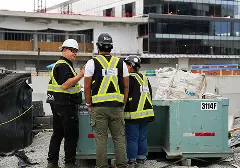
A construction waste diversion rate measures how much applicable project material is kept out of the disposal pathway through qualifying activities such as recycling, salvage or reuse. The calculation itself is simple, but the inputs depend on the certification, rating system, municipal requirement, contract or project-specific waste-management plan governing the project.
Waste Diversion Rate (%) = Qualifying Diverted Material ÷ Total Applicable Material Generated × 100
USGBC uses this basic relationship for construction and demolition waste calculations. The harder part is deciding what belongs in the numerator and denominator. Do not start calculating until you know which reporting standard and version apply to the project. 1 2
Accurate construction waste diversion reporting therefore depends on more than hauling material away from the jobsite. The project needs records showing material type, quantity, destination, handling pathway and any facility diversion information used in the final calculation.
Here is the Quick Answer:
- Identify the certification version or project requirement before calculating.
- Divide qualifying diverted material by total applicable material generated, then multiply by 100.
- Use consistent measurement units and retain records for every reported load.
- Do not assume every recycling, mixed-load, soil, salvage or waste-to-energy movement counts as 100% diversion.
- Track waste throughout construction instead of rebuilding the record from invoices at closeout.
What is a construction waste diversion rate?
A construction waste diversion rate expresses the share of applicable project material that qualifies as diverted from disposal under the governing reporting rules. The total applicable material generated forms the denominator, the qualifying diverted material forms the numerator, and the resulting percentage is the project diversion rate. 1
That project percentage should not be confused with a facility diversion rate. A project rate describes eligible material generated and diverted by a specific job. Metro Vancouver calculates each published private-facility diversion rate using the total waste recycled in the previous calendar year divided by the total waste received at that facility. The regional authority updates these rates annually. These published rates are based on facility-reported information and should be verified with the facility before being used in project calculations or reporting.
Metro Vancouver also states that its facility figures are based on information reported by the facilities and should be confirmed with the facility before being used for calculations, reporting or other purposes. A facility percentage is therefore an input that may be relevant to a project calculation; it is not the project’s diversion rate by itself. 3

The Basic Waste Diversion Formula
The basic arithmetic stays the same when a framework uses a standard diversion percentage. The project first establishes the applicable generated amount and the amount that qualifies as diverted.
Waste Diversion Rate (%) = (Qualifying Diverted Material ÷ Total Applicable Material Generated) × 100
For example, assume a project records 80 tonnes of applicable C&D material, of which 52 tonnes qualify as diverted and 28 tonnes are non-diverted. The arithmetic is 52 ÷ 80 × 100 = 65% diversion. This demonstrates the calculation only; whether all 52 tonnes qualify depends on the governing reporting rules. 1
Step 1: Identify the Reporting Standard Before Calculating
A project may be reporting to LEED, another green-building certification, a municipal demolition program, an owner or developer requirement, a contract target or an internal environmental reporting system. These programs should not be treated as interchangeable because each can define generated, excluded and diverted material differently.
Version matters within the same certification system. Under the current LEED v4.1 credit form, projects prepare a construction and demolition waste management plan and final report, use consistent units, exclude excavated soil and land-clearing debris, count alternative daily cover as waste rather than diversion, and apply specific rules to commingled processing.
LEED v5 changed the Construction and Demolition Waste Management credit to Construction and Demolition Waste Diversion and changed several calculation rules. Source-separated materials sent for single-material recycling and qualifying take-back programs are treated as 100% diverted, while salvaged materials receive a 200% diversion value. Mixed C&D sent to a processing facility uses the facility’s average recycling rate. If that rate is not verified by a third party, the assumed diversion rate is capped at a maximum of 35%.
A v4.1 project should therefore not use v5 calculation rules simply because v5 is newer. Confirm the project’s applicable standard and version before building the waste ledger or setting up formulas. 2 4
Step 2: Define What Belongs in the Calculation
Set the project boundary before adding quantities. At minimum, the waste record should identify the date, material, quantity, measurement unit, destination, handling pathway and supporting ticket or report associated with each load.
Common construction and demolition streams include concrete, asphalt, wood, metal, drywall or gypsum, cardboard, mixed construction debris and salvage or reuse material.
Do not automatically add soil, land-clearing material, hazardous waste or every reused material to the calculation. The LEED v4.1 credit form, for example, excludes excavated soil and land-clearing debris and applies different treatment to hazardous materials and onsite reuse depending on the pathway being pursued. 2

Step 3: Choose Weight or Volume and Stay Consistent
LEED v4.1 permits calculations by weight or volume, but the selected basis must remain consistent throughout the calculation. Mixing incompatible units without an accepted conversion creates a result that is difficult to defend later.
Weight often works well on construction projects because scale tickets can provide measured quantities, but it is not universally required. If the governing framework permits either method, choose the measurement basis early and use it consistently. Do not casually combine tonnes of concrete, cubic yards of wood and numbers of mixed-waste bins in one percentage formula.
Step 4: Separate Diverted Material from Disposed Material
A working waste ledger gives the project team one place to connect quantities with destinations and supporting records. The table below uses hypothetical entries rather than real facility figures.
| Date | Material | Quantity | Destination | Pathway | Diversion Basis | Supporting Record |
| Example | Clean Wood | X Tonnes | Facility A | Recycling | Applicable Program Rule | Scale Ticket |
| Example | Mixed C&D | X Tonnes | Facility B | Processing | Eligible Facility Rate | Facility Report |
| Example | Garbage | X Tonnes | Facility C | Disposal | 0% Diverted | Scale Ticket |
The ledger matters because a diversion audit needs more than the final percentage. A reviewer should be able to trace each reported quantity back to a load, material classification, destination and supporting record. USGBC guidance specifically calls for tracking waste leaving the site and retaining hauler reports, receipts and related documentation.
Step 5: Account Correctly for Mixed or Commingled Loads
Sending a 10-tonne mixed load to a recycling facility does not automatically mean that 10 tonnes qualify as diverted. Mixed material often requires a facility rate or another framework-specific treatment because part of the incoming load may ultimately be disposed.
Under the cited LEED v4.1 form, commingled material sent for processing uses the facility’s average recycling rate, and the project must retain documentation verifying that rate. Alternative daily cover must be treated as waste rather than diversion.
LEED v5 uses a different rule. Mixed C&D sent to a processing facility for recovery uses the facility’s average recycling rate. If that recycling rate is not verified by a third party, the diversion rate is capped at a maximum of 35%. 4
For a hypothetical calculation, assume the governing framework permits use of a verified facility rate, a mixed load weighs 20 tonnes, and the applicable verified rate is 70%:
20 × 0.70 = 14 tonnes qualifying as diverted
The remaining 6 tonnes would be non-diverted under that hypothetical setup. The 70% figure is an example only and should not be treated as a current rate for any real facility.
Step 6: Calculate the Overall Project Diversion Rate
Once each applicable waste stream has been classified under the governing reporting rules, total the material generated and the amount that qualifies as diverted. Keep the same measurement basis throughout the calculation.
For this hypothetical example, assume the project’s reporting framework allows the concrete, clean wood, and metal shown below to count fully as diverted. Also assume the 20-tonne mixed C&D load is eligible for a 70% verified facility diversion rate, resulting in 14 tonnes of qualifying diverted material. These assumptions are for calculation purposes only. 2
| Waste Stream | Generated | Qualifying Diverted | Disposed/Non-Diverted |
| Concrete | 30 t | 30 t | 0 t |
| Clean Wood | 15 t | 15 t | 0 t |
| Metal | 5 t | 5 t | 0 t |
| Mixed C&D | 20 t | 14 t | 6 t |
| Garbage | 10 t | 0 t | 10 t |
| Total | 80 t | 64 t | 16 t |
The overall diversion rate is:
64 ÷ 80 × 100 = 80% diversion
Under the stated assumptions, the hypothetical project therefore has an 80% construction waste diversion rate. This example demonstrates the arithmetic only. It does not mean every certification system would classify concrete, clean wood, metal, mixed C&D, or other materials in the same way. The qualifying amounts must be determined under the reporting standard and version that apply to the actual project.

What counts as diversion?
There is no universal list that applies to every green-building program. Depending on the governing framework, qualifying pathways can include recycling, reuse, salvage, donation, manufacturer take-back programs and other specifically recognized recovery routes.
Classification and documentation matter. A hauling ticket proving that material left the jobsite does not by itself establish that the full quantity qualifies as diversion. The record should show the destination and, for mixed processing where required, the eligible proportion that was actually counted as diverted.
What should be excluded from a diversion calculation?
There is no universal exclusion list. Apply the rules of the governing certification, municipal program or contract rather than carrying exclusions from one framework into another.
Under the cited LEED v4.1 provisions, excavated soil and land-clearing debris are excluded from the C&D calculations. Hazardous materials are also excluded from the stated waste-generation calculations, while onsite reuse receives different treatment depending on the option being pursued. Alternative daily cover is included as waste rather than diversion.
That means a project should not add every material leaving the property to the denominator, count excluded material as diverted to increase the percentage, assume reuse is treated identically under every pathway, or carry a LEED v4.1 exclusion into an unrelated reporting standard.
Why Facility Diversion Rates Matter
Facility diversion rates become particularly important when mixed construction material is processed offsite. Metro Vancouver licenses private waste-management facilities and publishes annual diversion information based on facility-reported quantities.
Metro Vancouver calculates each published facility rate using the total waste recycled in the previous calendar year divided by total waste received and updates the rates annually. It also warns users to confirm the information with the respective facility before using it in calculations or reporting.
For project teams, the practical rule is straightforward: do not copy a facility percentage from an old project report and assume it remains valid for the current reporting period. Keep the supporting facility documentation associated with the rate used for the project. 3
Documentation You Need for a Green Building Waste Audit
The exact submission package depends on the applicable program, but a strong waste record commonly includes scale tickets, hauling records, dates, material classifications, receiving-facility details, invoices where relevant, disposal or recycling destinations, facility-rate documentation, salvage or donation records, the waste-management plan, periodic summaries and the final diversion report.
The LEED v4.1 form specifically requires a waste management plan and final report covering generated waste and diversion information, while USGBC guidance calls for hauler reports and other supporting records. A credible audit trail should allow a reviewer to understand how each quantity entered the final calculation.
Track Diversion During the Project, Not After It
Set up the waste plan before construction begins, identify the expected material streams and intended destinations, and record each load as it leaves the site. Reconstructing months of waste movement from unidentified receipts at closeout creates unnecessary gaps and classification problems.
Reconcile tickets on a regular schedule appropriate to the project, retain the facility documentation used for mixed-load calculations and compare current performance with the project target. USGBC specifically recommends calculating diversion periodically so teams can make changes before construction is complete.
If performance is falling short, the project team may still have time to improve source separation, reduce contamination or use another eligible diversion strategy under the governing standard. The important point is to identify the issue while the work is active rather than after the final load has left.

Common Waste Diversion Calculation Mistakes
These errors usually come from using the correct arithmetic with the wrong inputs or incomplete documentation.
- Dividing recycling by recycling plus garbage without checking the standard. The formula may be correct while the material classifications are not.
- Treating every load sent to a recycling facility as 100% diverted. Mixed processing may require a facility-specific or framework-prescribed rate.
- Mixing weight and volume. Keep the measurement basis consistent.
- Including excluded materials. Excavated soil is an important LEED v4.1 example.
- Using an outdated facility rate. Confirm the rate and reporting period.
- Losing scale tickets or hauling records. Missing evidence can make an otherwise reasonable calculation difficult to support.
- Mixing LEED versions. Do not apply v5 rules to a v4.1 project.
- Waiting until closeout. Track and reconcile waste while the project is active.
Waste Diversion Rates vs. Municipal Recycling Requirements
A green-building diversion target is not necessarily the same thing as a municipal demolition recycling requirement. Metro Vancouver notes that member municipalities maintain their own construction and demolition bylaws and procedures, including different salvage, recycling and permitting requirements. 5
Metro Vancouver also provides a demolition waste generation calculator that estimates material quantities and the amount that may need to be recycled or reused to meet applicable municipal requirements. It is a different planning tool from a LEED project diversion calculation. 6
For a project subject to municipal demolition rules, confirm the current requirements with the applicable municipality rather than assuming the project’s certification target satisfies the local requirement. 5

How Peak Disposal Supports Waste Diversion Reporting
Peak Disposal supports qualifying construction projects through waste-stream planning, source-separated hauling arrangements where appropriate, hauling coordination, diversion tracking, and organized supporting documentation for project reporting. Peak’s role is operational: it helps keep hauling and waste records organized throughout the project.
The project team, sustainability consultant or applicable certification professional remains responsible for deciding how each material should be classified and calculated under the governing green-building standard. Peak Disposal does not certify a diversion percentage, guarantee LEED points or certification, perform the green-building audit, choose the applicable LEED version or guarantee that a material qualifies for diversion credit.
For projects using several material streams, Peak Disposal can also discuss an appropriate hauling setup based on the disclosed materials and project requirements. Project teams can review Peak Disposal’s Construction Bin Rental service and available roll-off bin sizes when planning the hauling arrangement.
Need Waste Diversion Records for Your Project?
Tell Peak Disposal about the project, expected material streams, diversion goals and reporting requirements. The team can help plan appropriate hauling arrangements and provide supporting waste-stream documentation for qualifying projects.
LEED Waste Diversion & Reporting, Talk to Peak About Your Project
Sources:
- U.S. Green Building Council — Construction and Demolition Waste Management Guide
- U.S. Green Building Council — LEED v4.1 Construction & Demolition Waste Management Credit Form
- Metro Vancouver — Facility Diversion Rates
- U.S. Green Building Council — LEED v5 BD+C Rating System, February 2026 Edition
- Metro Vancouver — Construction and Demolition Waste, Recycling, and Reuse
- Metro Vancouver — Demolition Waste Generation Rates Calculator
- Peak Disposal — LEED Waste Diversion & Reporting