When planning a major renovation, large property cleanout, demolition project, or commercial construction job, debris volume can become one of the biggest challenges. While smaller dumpsters may work well for targeted projects, larger projects often generate far more material than expected as work progresses.
This is where a 30-yard dumpster often becomes the preferred solution. With substantially more capacity than smaller containers, it helps accommodate large volumes of debris while reducing the need for multiple pickups, recurring container swaps, or additional disposal trips.
Understanding the dimensions, capacity, and common uses of a 30-yard dumpster can help determine whether it is the right fit for your project.
Here is the Quick Answer:
Peak Disposal’s 30-yard construction bin measures 18 feet long, 8 feet wide, and 6 feet high. It is commonly used for whole-home renovations, major cleanouts, demolition projects, commercial renovations, construction work, and other projects that generate substantial debris volumes. For many large projects, the primary advantage is additional capacity rather than weight management.
What are the dimensions of a 30-yard dumpster?
While exact dimensions can vary between providers, Peak Disposal’s 30-yard construction bin measures:
- Length: 18 feet
- Width: 8 feet
- Height: 6 feet
Compared with 10-yard and 20-yard containers, the increased height and length provide substantially more disposal capacity.
The larger footprint allows projects to continue longer before pickups or container swaps become necessary, making the 30-yard dumpster particularly useful when debris volumes are difficult to predict.

How does a 30-yard dumpster compare to pickup-truck loads?
Many people find dumpster sizes easier to understand when comparing them to pickup-truck loads.
A 30-yard dumpster can often accommodate the equivalent of numerous pickup-truck loads of debris, depending on material type and loading practices. For major cleanouts, large renovations, demolition work, and commercial projects, this additional capacity can significantly reduce the number of disposal trips required.
Rather than repeatedly loading and unloading trucks throughout a project, debris can remain contained in a single location until pickup.
How much can a 30-yard dumpster hold?
The term “30-yard” refers to the dumpster’s internal volume, which is approximately 30 cubic yards.
For many projects, this amount of capacity is substantial.
A 30-yard dumpster is often suitable for:
- whole-home renovations
- large estate cleanouts
- commercial renovations
- demolition projects
- warehouse cleanouts
- tenant improvements
- construction projects
- redevelopment work
- large-volume property cleanups
Because of its size, a 30-yard dumpster is often selected when debris volume is expected to become the primary challenge rather than material weight.
What fits in a 30-yard dumpster?
A 30-yard dumpster is commonly used when projects generate large amounts of bulky debris rather than dense, heavy materials.
Materials often loaded into a 30-yard dumpster include:
- furniture
- cabinetry
- drywall
- wood framing
- flooring materials
- household contents
- mattresses
- shelving
- packaging materials
- renovation debris
- demolition debris
- commercial cleanup materials
Because bulky materials occupy significant space, larger-capacity containers often provide a more practical solution than smaller dumpsters that may fill quickly even when weight limits have not been reached.
Why 30-Yard Dumpsters Are Often Chosen for Large-Volume Projects
The primary advantage of a 30-yard dumpster is capacity.
Many large projects generate debris gradually over several weeks. Demolition materials, drywall, flooring, cabinetry, furniture, packaging, fixtures, and miscellaneous waste can accumulate far faster than initially expected.
In these situations, larger capacity often improves project efficiency by reducing interruptions associated with container changes or additional pickups.
For many contractors, property managers, and homeowners, the goal is not necessarily to maximize dumpster size. The goal is to maintain sufficient capacity throughout the project so debris does not slow work progress.
This is one reason 30-yard dumpsters are frequently selected for large-scale projects where waste generation is difficult to predict.
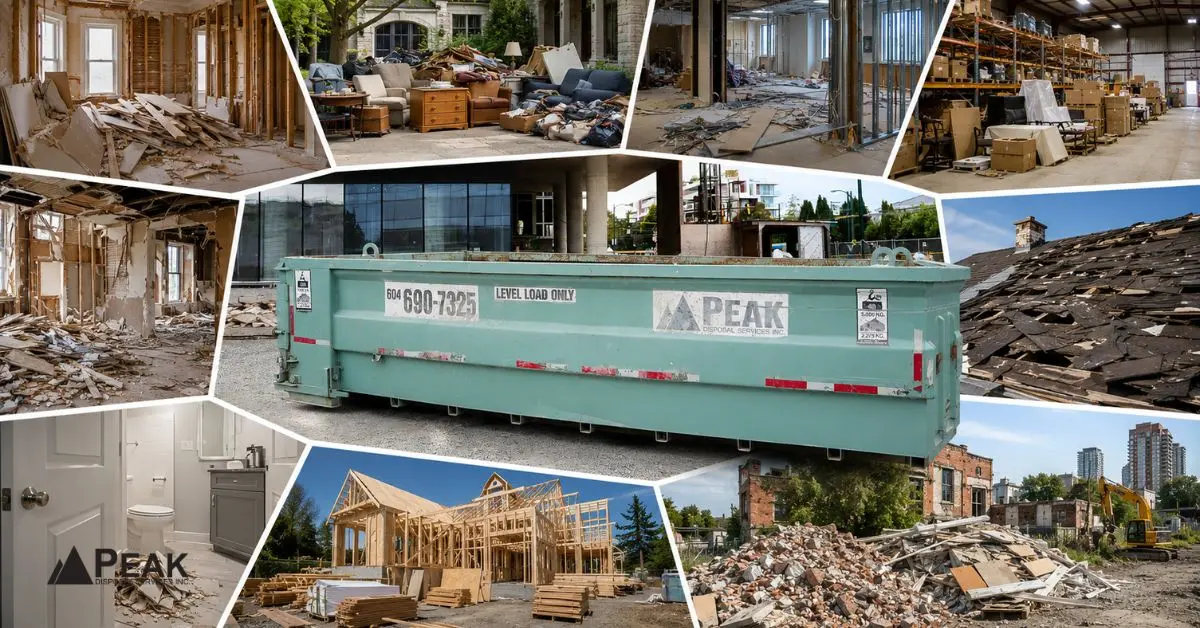
Is a 30-yard dumpster the right size for your project?
The examples below provide a general guide.
| Project Type | Why a 30-Yard Dumpster Often Works Well |
| Whole-Home Renovation | Provides Capacity for Multiple Renovation Phases |
| Large Estate Cleanout | Accommodates Substantial Household Contents |
| Commercial Renovation | Supports Higher Debris Volumes and Longer Timelines |
| Warehouse Cleanout | Handles Bulky Materials and Accumulated Waste |
| Multi-Room Demolition | Reduces the Need for Frequent Container Changes |
| Large Roofing Project | May Accommodate Substantial Roofing Debris Volumes |
| Construction Project | Supports Ongoing Waste Generation Throughout Active Work |
| Redevelopment Project | Suitable for Large Volumes of Mixed Debris |
| Small Bathroom Renovation | Often Larger Than Necessary |
Actual capacity depends on both debris volume and material type. Dense materials may require additional planning regardless of container size.
Common Projects That Use a 30-Yard Dumpster
Because a 30-yard dumpster is designed primarily for volume, it is commonly selected for projects where debris continues accumulating throughout multiple work phases. Some of the most common examples include the following.
Whole-Home Renovations
Major renovations often generate debris from demolition, flooring removal, drywall replacement, cabinetry disposal, fixture upgrades, and packaging waste. The larger capacity helps accommodate these materials as the project progresses.
Large Estate Cleanouts
Estate cleanouts can involve substantial amounts of furniture, household contents, storage materials, and accumulated belongings. Additional capacity helps simplify disposal planning.
Commercial Renovations
Commercial properties frequently generate significant waste during tenant improvements, office renovations, retail upgrades, and redevelopment projects. A 30-yard dumpster helps support ongoing debris removal throughout active construction.
Construction Projects
Construction sites often generate debris throughout multiple phases of work. Larger dumpsters can help maintain cleaner sites while reducing the need for frequent hauling interruptions.
Demolition Projects
Projects involving interior demolition, structural removal, or extensive redevelopment frequently generate large debris volumes that benefit from additional container capacity.
When is a 30-yard dumpster usually the best choice?
A 30-yard dumpster is often a practical choice when:
- debris volume is expected to be substantial
- multiple project phases will generate waste
- whole-home renovations are underway
- large cleanouts are planned
- commercial renovations are occurring
- recurring container swaps would be disruptive
- project timelines extend over several weeks
For many large projects, additional capacity creates greater operational value than a smaller container footprint.

Will a 30-yard dumpster fit on a driveway?
In some situations, yes.
However, a 30-yard dumpster requires more space than smaller containers and should be evaluated carefully before delivery.
Factors that may affect placement include:
- driveway dimensions
- slope conditions
- access limitations
- overhead obstructions
- vehicle turning requirements
- local placement requirements
Reviewing access conditions before delivery helps determine whether a 30-yard container can be positioned safely and efficiently.
Why Additional Capacity Can Reduce Project Disruptions
One of the biggest challenges on larger projects is maintaining adequate disposal capacity as work progresses.
When dumpsters reach capacity unexpectedly, projects may need to pause while waiting for pickups, swaps, or additional containers. These interruptions can affect workflow, scheduling, and site organization.
Because a 30-yard dumpster offers significantly more volume than smaller containers, it often provides greater flexibility for projects where debris generation is uncertain.
For many projects, avoiding disposal interruptions becomes one of the primary reasons for choosing a larger container.
30-Yard Dumpster vs. Smaller Dumpster Sizes
A 30-yard dumpster is not necessarily the right choice for every project.
Smaller containers often remain the better option when:
- heavy materials are the primary concern
- available space is limited
- debris volumes are relatively modest
- projects are short in duration
However, when debris volume becomes the dominant consideration, larger capacity frequently creates greater operational efficiency.
If you’re comparing container sizes, our 20-Yard Dumpster Dimensions & Capacity guide explains when a slightly smaller bin may be the better choice.
| Factor | 20-Yard Dumpster | 30-Yard Dumpster |
| Best For | Medium-Sized Projects | Large-Volume Projects |
| Renovations | Multi-Room Projects | Whole-Home Projects |
| Cleanouts | Estate & Moving Cleanouts | Large Estate & Property Cleanouts |
| Construction | Moderate Debris Volumes | Higher Debris Volumes |
| Footprint | Smaller | Larger |
| Capacity | Moderate | Substantially Greater |
When You May Need a Smaller Dumpster Instead
A smaller dumpster may be more practical if:
- the project involves only one room
- concrete or soil is the primary material
- driveway space is limited
- debris volumes are relatively modest
- weight management is more important than volume
Selecting a dumpster that closely matches project requirements often improves both efficiency and cost management.
How to Determine Whether a 30-Yard Dumpster Is Right for Your Project
A 30-yard dumpster is often a strong choice when:
- project scope is extensive
- debris volume is difficult to estimate
- multiple waste streams are involved
- work will continue over several phases
- commercial or large residential projects are underway
- minimizing container changes is important
For many large projects, the additional capacity provides valuable flexibility as conditions evolve.

How Peak Disposal Helps Match the Right Bin to the Project
Selecting the correct dumpster size involves more than estimating debris volume.
Peak Disposal helps homeowners, contractors, businesses, and property managers evaluate project scope, material type, site conditions, and operational requirements before delivery.
This helps reduce the risk of ordering a container that lacks sufficient capacity or selecting a dumpster larger than necessary.
Is a 30-yard dumpster right for your project?
For large renovations, commercial projects, demolition work, estate cleanouts, and construction activities, a 30-yard dumpster is often one of the most practical options available.
Its primary advantage is volume. When projects generate substantial amounts of debris over time, additional capacity can help maintain workflow efficiency while reducing avoidable disposal interruptions.
If you are unsure whether a 30-yard dumpster matches your project requirements, Peak Disposal can help identify the most appropriate solution based on project scope, material type, and site conditions.