
Concrete removal requires a bin and hauling plan built around material weight, not just available container volume. Peak Disposal provides concrete and heavy-material bin rental for contractors, demolition crews, landscapers, property managers, and homeowners across Metro Vancouver and the Fraser Valley.
Tell dispatch what you are removing, approximately how much material you expect, and how the bin will be loaded so an appropriate setup can be coordinated.
Concrete, brick, masonry, asphalt, and similar materials are extremely dense. Unlike bulky construction debris, these materials can reach transportation-weight limits long before a larger container is visually full. For this reason, Peak Disposal generally uses smaller, low-profile bins to help manage heavy-material loads.
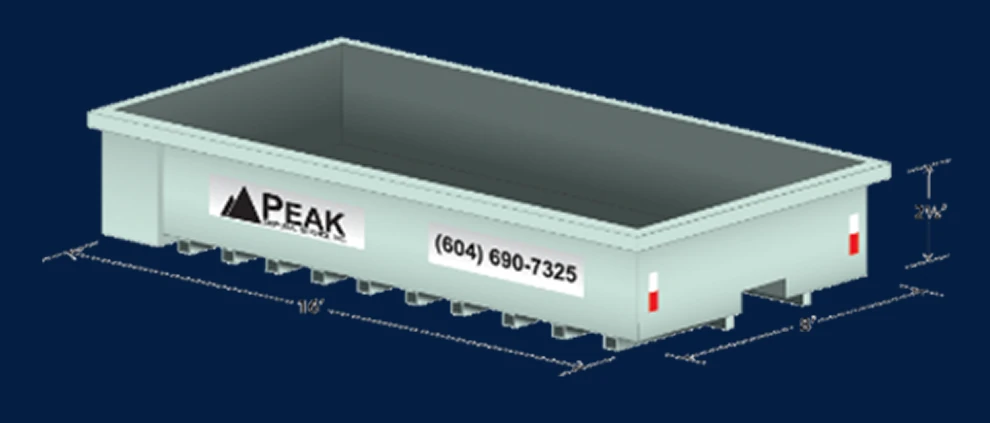
Peak Disposal’s 8-yard bin is well suited to dense materials because its compact dimensions and low walls make it easier to manage heavy loads without relying on unnecessary container volume.
Best For: Concrete, brick, rock, masonry, asphalt, and other approved dense materials
A concrete bin should not be filled based simply on how much empty space remains. The appropriate load depends on the material and transportation requirements for the specific project.
Before loading, consider:
If the project will generate a large quantity of concrete, multiple loads or bin exchanges may be more appropriate than using a larger container.
Concrete loads should be identified before delivery and kept separate from incompatible waste streams unless another arrangement has been approved.
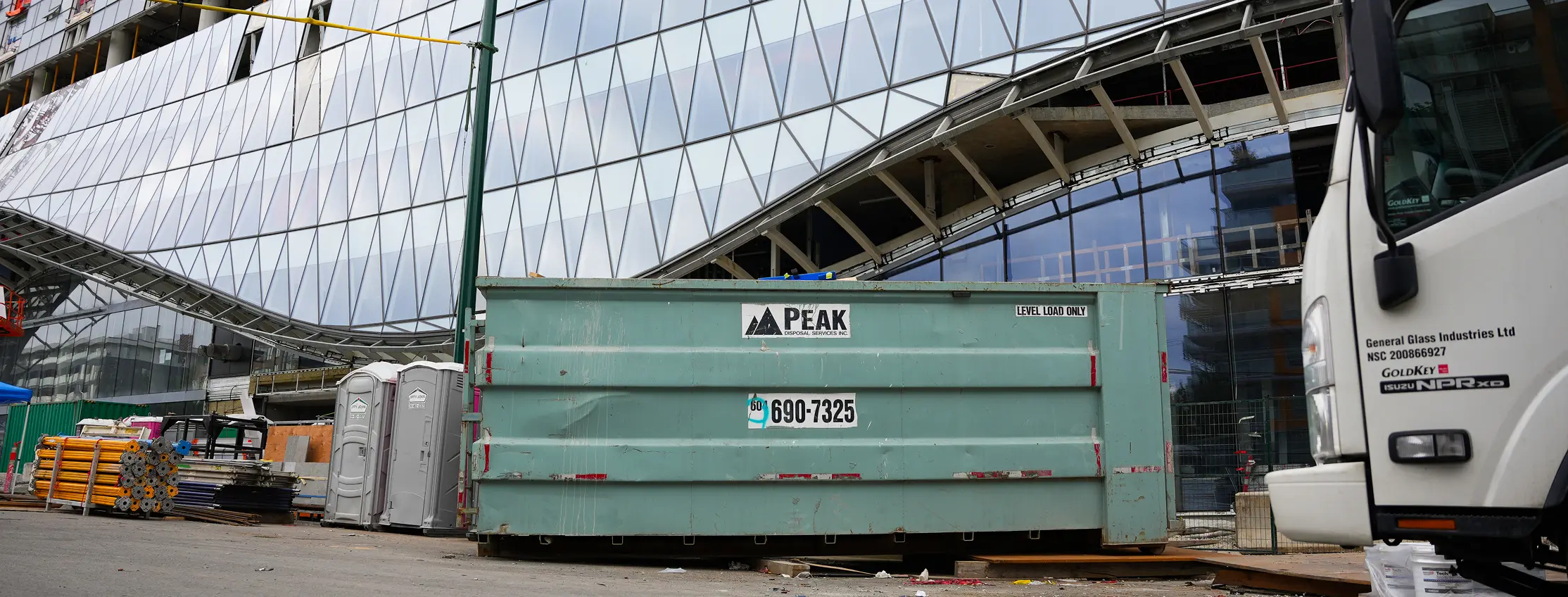
Depending on the planned receiving pathway, suitable loads may include:
Rebar, wire mesh, attached soil, asphalt, or other materials should always be disclosed before the bin is ordered because they may affect loading and receiving requirements.
Do not add other waste streams to a dedicated concrete load unless Peak Disposal has confirmed the arrangement.
These may include:
Keeping suitable concrete separated can support more efficient handling and may preserve recycling or material-recovery options at the receiving facility.
Tell Peak Disposal what you’re removing, how much material you expect, and where your project is located. Dispatch can help coordinate an appropriate heavy-material bin and hauling plan.
Heavy-material projects require more planning than ordinary cleanup loads. Peak Disposal helps coordinate container selection, loading guidance, hauling, and receiving requirements around the disclosed material stream.
Concrete volume, material weight, reinforcement, loading equipment, and site conditions can all be reviewed before delivery.
Peak Disposal coordinates hauling to an appropriate receiving, processing, or recycling facility based on the material condition and applicable facility requirements.
If you are concerned about driveway damage, have three 6-foot-long 2×4 or 2×6 boards available for placement beneath the bin rails. Peak Disposal does not supply the protective wood.
Speak with dispatch about bin selection, loading instructions, exchanges, placement, delivery, and pickup.
Planning the load before demolition begins can help prevent overloading, access problems, and unnecessary hauling interruptions.
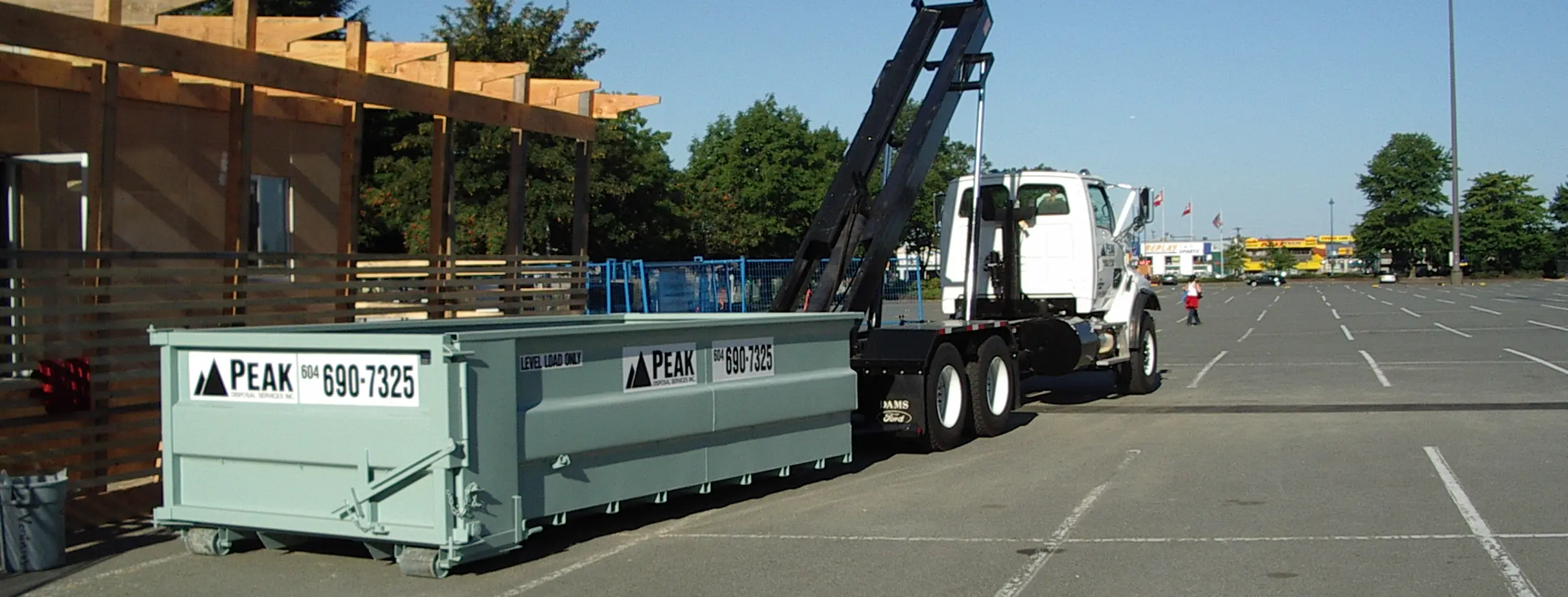
Share the project location, approximate concrete quantity, whether reinforcement is present, and whether soil, asphalt, brick, or other materials are attached.
Peak Disposal can review the expected weight, loading method, site access, and project conditions to help determine a suitable container and loading approach.
Coordinate delivery, follow the project-specific loading instructions, and contact dispatch when the planned load is ready for collection or exchange.
Peak Disposal coordinates concrete and heavy-material bin rental throughout its Metro Vancouver and Fraser Valley service areas.
Concrete Bin Service Areas:
Related Material Disposal Services:
Our dispatch team can help you choose the right bin, review your materials, and coordinate delivery and pickup.
Suite 205, 145
Schoolhouse Street
Coquitlam, BC V3K 4X8
Dispatch: (604) 690-7325
Office: (604) 951-1177
Monday–Saturday: 7:00 AM–5:00 PM
Sunday: Closed
Based in Coquitlam, Peak Disposal provides concrete and heavy-material bin rental and coordinated hauling throughout its Metro Vancouver and Fraser Valley service areas.
To successfully solve all the issues related to construction waste management, we have established Long-term and stable partnerships with various clients
"Efficient service, the delivery and pick up of the bin was provided on a timely manner, great service."
"Excellent service! Friendly employee dropped off the bin as requested on time. We had to request keeping the bin longer than what was quoted and they managed to do that for us. I would highly recommend and would use their services again if needed. Thanks so much!"
"I was amazed how fast the bin came after my call. The contractor I was using was expecting a 48 hour wait. I called Peak and we had a bin within 3 hours. Great service."
"Easy setup and solid delivery team. will be using again"
"Use them for work and home. Good price. Great service. Always a quick response. "
Street-placement and construction-noise requirements vary between municipalities across Metro Vancouver and the Fraser Valley.
If a concrete bin will occupy a public street, curb lane, boulevard, sidewalk, or other public right-of-way, municipal permission may be required. Customers should confirm the applicable requirements with the local municipality before delivery.
Concrete demolition, breaking, loading, and equipment use can also generate significant noise. Contractors and property owners should plan work around the applicable municipal noise bylaws and permitted work periods for the project location.
Peak Disposal can coordinate delivery around the approved placement plan, but customers or the appropriate project party remain responsible for obtaining required municipal approvals.
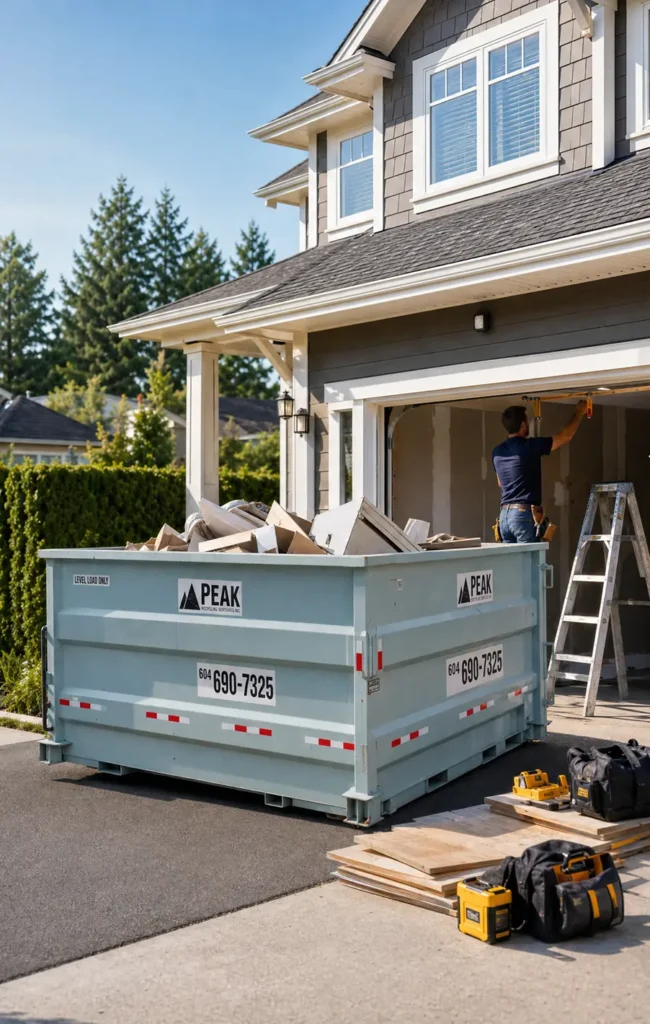
Peak Disposal’s 8-yard low-profile bin is generally the starting point for concrete and other dense materials. The appropriate setup depends on the quantity, reinforcement, attached materials, loading method, transportation requirements, and project conditions.
There is no single universal concrete-bin weight limit that applies to every truck and project. Safe transport depends on the vehicle configuration, material, loading distribution, and applicable transportation requirements. Follow the loading instructions provided by Peak Disposal for the specific job rather than relying on a generic tonnage figure.
It may be accepted, but reinforced concrete should be disclosed before delivery. Rebar or wire mesh can affect handling and receiving requirements, and protruding steel must remain safely contained within the bin.
No. Material must remain within the container and follow the approved loading level. Concrete may reach the planned transportation weight well before the bin appears full.
Dedicated concrete loads should otherwise remain separated from soil, wood, garbage, and other demolition debris.
Not necessarily. If placement instructions are clear and the site is accessible, you may not need to be present. Special placement requirements or restricted access should be discussed with dispatch before delivery.
Yes. Bin exchanges can be coordinated for ongoing projects, subject to scheduling, material requirements, and site conditions. Contact dispatch before the planned load is reached so the next collection or exchange can be arranged.
Whether you are removing a driveway, patio, foundation section, retaining wall, slab, or other concrete structure, the right disposal plan starts with understanding the material and expected load. Tell Peak Disposal what you are removing, how much concrete you expect, and where the project is located.
"Peak Disposal's customer service is top notch, very honest, reliable and so responsive! Highly recommended."