
Peak Disposal provides wood waste bin rental and coordinated hauling for framing, renovation, demolition, land-clearing, and property-improvement projects across Metro Vancouver and the Fraser Valley.
Tell dispatch what type of wood you are removing, approximately how much you expect, and whether other materials are mixed with the load so an appropriate bin and receiving pathway can be discussed.
Separating wood by material type can affect where it can be received and whether recycling options are available. Metro Vancouver defines a specific “clean wood” stream, while painted, stained, treated, glued, engineered, and mixed wood may require different handling or receiving pathways.
Metro Vancouver defines clean wood as solid wood, lumber, and pallets that are unpainted, unstained, untreated, and free of glues and resins. Nails and other metal fasteners are permitted in clean wood.
Depending on the receiving facility and load requirements, examples may include:
Keep qualifying clean wood separate from garbage and incompatible construction debris where a dedicated wood-recycling pathway is planned.
Wood that is painted, stained, chemically treated, glued, laminated, engineered, or mixed with other demolition materials should not automatically be treated as clean recyclable wood.
Tell Peak Disposal if the load includes:
The appropriate receiving pathway can then be determined based on the disclosed material and facility requirements.
Wood waste is generally less dense than concrete or soil, but framing lumber, demolition timber, pallets, and bulky wood debris can consume considerable container volume. Bin selection should therefore account for the type, quantity, dimensions, and loading method of the material.

May Suit: Smaller framing, renovation, carpentry, and residential wood-removal projects

May Suit: Larger renovation, framing, construction, and demolition wood loads

May Suit: Large framing, demolition, commercial construction, and high-volume wood debris

May Suit: Major construction, redevelopment, large demolition, and other high-volume wood-removal projects
Tell dispatch what type of wood you have and approximately how much material your project will generate.
Wood should be identified before loading because a dedicated clean-wood stream has different receiving requirements from treated or mixed construction debris.
Depending on source conditions and the planned receiving pathway, materials may include:
Acceptance depends on the material condition and intended receiving pathway.
Do not mix other waste into a dedicated soil load unless Peak Disposal has confirmed the arrangement.
Do not add incompatible materials to a dedicated wood load unless Peak Disposal has confirmed the arrangement. These may include:
Wood-removal projects can range from a small renovation to high-volume framing and demolition work. Peak Disposal can help coordinate bin selection, material sorting, hauling, and receiving requirements around the disclosed waste stream.
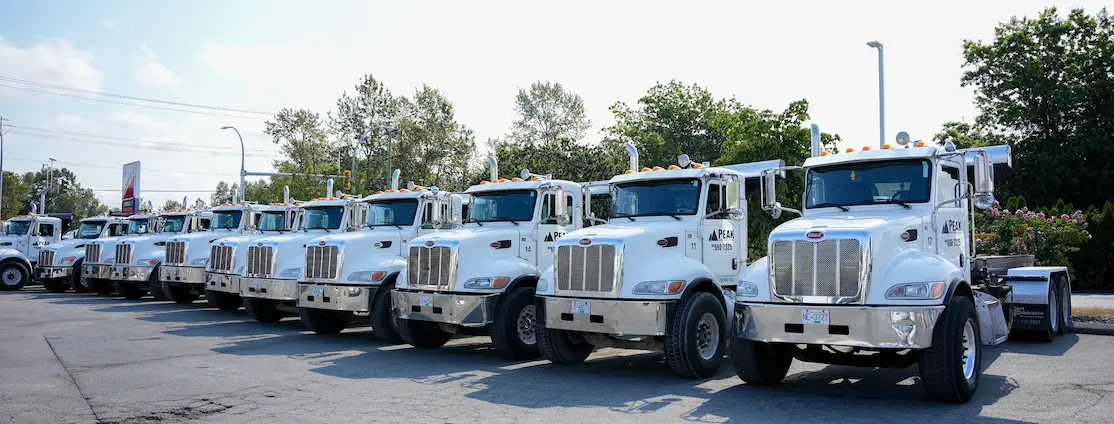
Tell dispatch whether the material is clean, painted, stained, treated, engineered, mixed, or generated through demolition so the load can be planned appropriately.
Peak Disposal coordinates hauling to an appropriate receiving, processing, recycling, or disposal facility based on the disclosed material and applicable facility requirements.
If you are concerned about driveway damage, have three 6-foot-long 2×4 or 2×6 boards available for placement beneath the bin rails. Peak Disposal does not supply the protective wood.
Speak with dispatch about bin sizing, wood sorting, placement, loading requirements, exchanges, delivery, and pickup.
Tell Peak Disposal what type of wood you are removing, approximately how much you expect, and where your project is located. Dispatch can help coordinate an appropriate bin and hauling plan.
Identifying the wood and expected volume before delivery helps determine an appropriate bin and receiving pathway.
Share the project location, approximate quantity, and whether the wood is clean, painted, stained, treated, engineered, or mixed with other materials.
Peak Disposal can review the expected volume, material type, loading method, placement space, and project conditions to help determine a suitable setup.
Coordinate delivery, follow the loading instructions provided for the planned waste stream, and contact dispatch when the bin is ready for collection or exchange.
Peak Disposal coordinates wood waste bin rental and hauling throughout its Metro Vancouver and Fraser Valley service areas.
Dirt & Soil Bin Service Areas:
Related Construction Disposal Services:
Our dispatch team can help you choose the right bin, review your materials, and coordinate delivery and pickup.
Suite 205, 145
Schoolhouse Street
Coquitlam, BC V3K 4X8
Dispatch: (604) 690-7325
Office: (604) 951-1177
Monday–Saturday: 7:00 AM–5:00 PM
Sunday: Closed
Based in Coquitlam, Peak Disposal provides wood waste bin rental and coordinated hauling for construction, renovation, demolition, and property-improvement projects throughout its Metro Vancouver and Fraser Valley service areas.
To successfully solve all the issues related to construction waste management, we have established Long-term and stable partnerships with various clients
"Efficient service, the delivery and pick up of the bin was provided on a timely manner, great service."
"Excellent service! Friendly employee dropped off the bin as requested on time. We had to request keeping the bin longer than what was quoted and they managed to do that for us. I would highly recommend and would use their services again if needed. Thanks so much!"
"I was amazed how fast the bin came after my call. The contractor I was using was expecting a 48 hour wait. I called Peak and we had a bin within 3 hours. Great service."
"Easy setup and solid delivery team. will be using again"
"Use them for work and home. Good price. Great service. Always a quick response. "
Street-placement and construction-noise requirements vary between municipalities across Metro Vancouver and the Fraser Valley.
If a wood waste bin will occupy a public street, curb lane, boulevard, sidewalk, or other public right-of-way, municipal permission may be required. Customers should confirm the applicable requirements with the local municipality before delivery.
Demolition, construction, loading, and equipment use can also generate significant noise. Contractors and property owners should plan work around applicable municipal noise bylaws and permitted work periods for the project location.
Peak Disposal can coordinate delivery around the approved placement plan, but customers or the appropriate project party remain responsible for obtaining required municipal approvals.
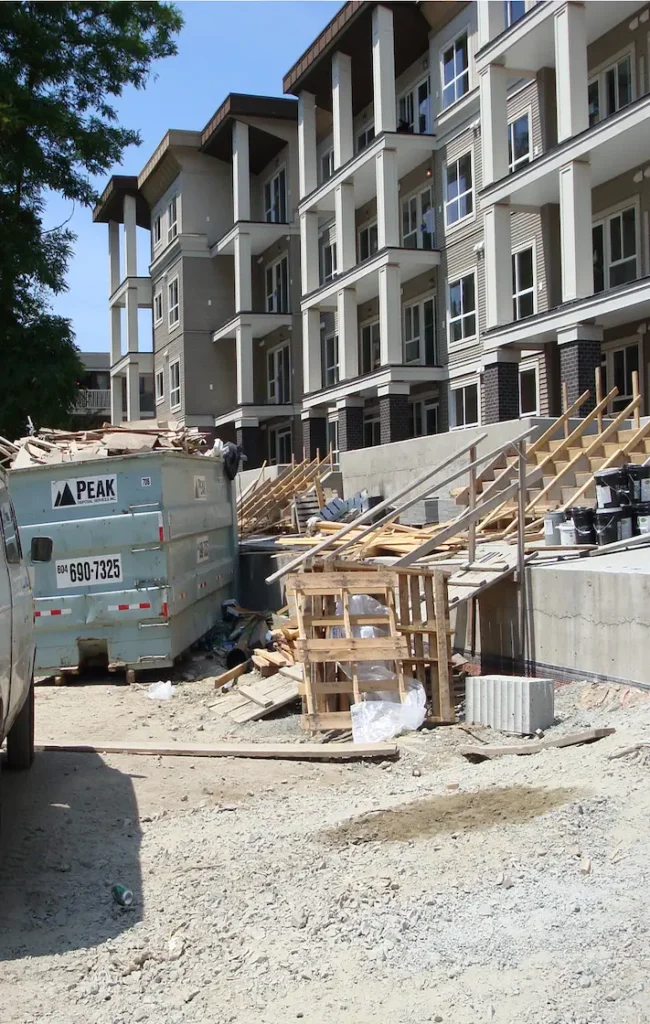
Metro Vancouver defines clean wood as solid wood, lumber, and pallets that are unpainted, unstained, untreated, and free of glues and resins. Painted, stained, treated, glued, engineered, or mixed wood should not automatically be treated as clean wood and may require a different receiving pathway.
The appropriate size depends on the amount and type of wood, the dimensions of the debris, loading method, placement space, and available equipment. Peak Disposal's 14- and 20-yard bins may suit many wood-removal projects, while larger projects may require additional capacity or bin exchanges.
Do not assume branches, stumps, and land-clearing debris can be mixed with a dedicated lumber or clean-wood load. Woody vegetation and dimensional lumber can follow different receiving pathways. Tell dispatch what material you have before loading.
Not necessarily for qualifying clean wood. Metro Vancouver's clean-wood definition permits nails and other metal fasteners. Other attached materials or finishes can affect whether the wood qualifies for a particular recycling stream.
Not in a dedicated clean-wood load unless Peak Disposal has confirmed that the planned receiving pathway allows the combination. Keeping qualifying wood separate can preserve recycling options and prevent the load from being treated as mixed waste.
Wood may contribute to construction and demolition waste-diversion calculations when it is managed through an eligible diversion pathway and appropriately documented under the requirements applicable to the project. Projects pursuing LEED certification should confirm the applicable rating-system requirements and maintain the necessary waste records.
Delivery and exchange timing depends on bin availability, project location, dispatch scheduling, site access, and project requirements. Contact dispatch with your preferred timing to confirm current availability.
Whether you are managing framing off-cuts, renovation lumber, demolition timber, pallets, or another wood waste stream, identifying the material before loading helps determine the appropriate bin and receiving pathway. Tell Peak Disposal what type of wood you have, approximately how much your project will generate, and where the site is located.
"Peak Disposal's customer service is top notch, very honest, reliable and so responsive! Highly recommended."